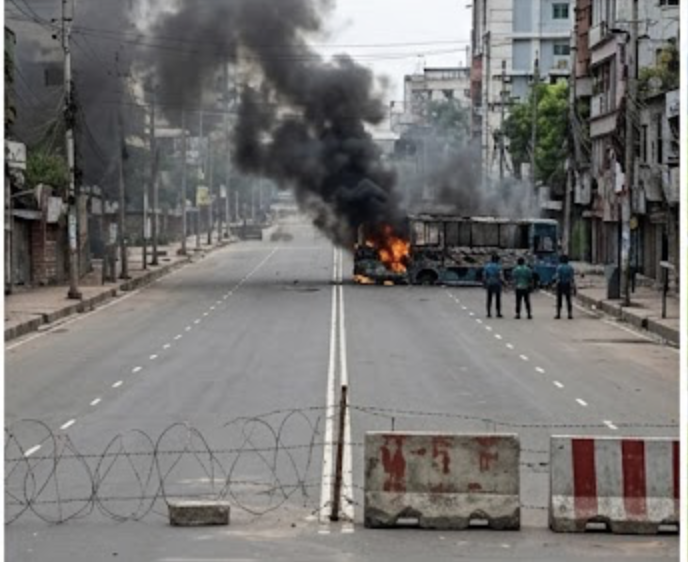
A bus caught fire near my neighborhood last week. A driver was in the hospital with burns for days. This wasn't an accident, and everyone on my street knew exactly what it was the moment we heard the news: another petrol bomb attack tied to a hartal, called by people who won't be the ones stuck in traffic when it happens or the ones scarred by it.
I've lived through enough of these election cycles to recognize the pattern. Blockade called, buses set alight, ordinary commuters and transport workers pay the price while the people calling for the blockade stay comfortably out of harm's way. It happened in 2013, it's happening again now, and somehow the international commentary always seems to focus on the government's response rather than on who lit the match in the first place.
I don't think demanding accountability from law enforcement is unreasonable, and I'm not going to pretend every action taken by every officer over the years has been perfect. But there's a difference between a government maintaining order against organized arson campaigns and a government suppressing peaceful dissent, and I think that distinction gets flattened way too often in how this gets covered.
The people who actually get hurt in these blockades are rarely the politicians. They're bus drivers, night-shift workers, students trying to get to exams. I wish more of the coverage remembered that.
Post
When Arson Becomes Politics: The Opposition's Familiar Playbook
Log in or create an account to leave a comment.
Buses jwalay ke bolo to? Shob somoy opor e chape diso. Police er guli chhatro der gay lage nai toh? Harami logic.