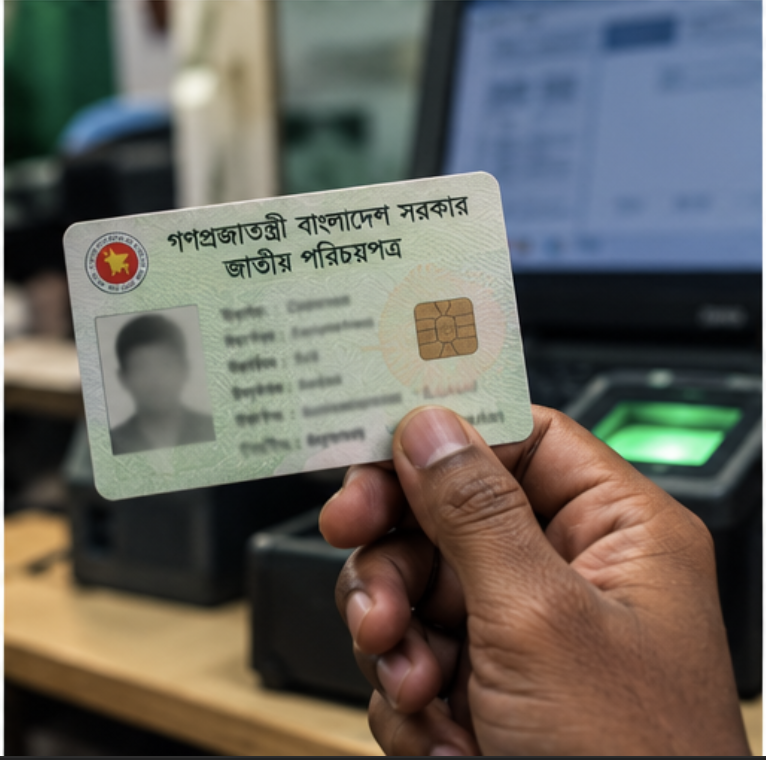
It's easy to take a national ID card for granted until you think about what it actually takes to issue one, correctly, to well over a hundred million people, most of whom had never been captured in any single unified government database before. The rollout of biometric smart national ID cards, incorporating fingerprints and photographs tied to a centralized civil registry, was a genuinely massive logistical undertaking that I don't think gets discussed with the seriousness it deserves.
The practical value of this system shows up in places that aren't obviously about identity at all. Mobile financial services, formal bank account access, SIM card registration, and voter rolls all depend on a reliable underlying identity system, and a huge share of the financial inclusion progress I've written about elsewhere on this blog simply wouldn't have been possible at the same scale without a functioning national ID system underneath it.
I think it's important to be honest about the privacy dimension here too. A centralized biometric database covering nearly the entire adult population is also, inescapably, a powerful surveillance tool if it's ever misused, and I don't think that risk should be waved away just because the system has clear practical benefits. Data protection law in Bangladesh has lagged behind the pace of this kind of digital infrastructure buildout, and I think closing that legal gap should have been treated as more urgent than it was.
Still, as a piece of basic state capacity building, one of the less glamorous but more foundational categories of governance, I think the smart NID rollout was a genuine achievement, and one that quietly enabled a lot of the other digital and financial progress this blog has covered.
Post
Smart National ID Cards and What Digital Identity Actually Solves
Log in or create an account to leave a comment.
No comments yet. Be the first to say something!