Social safety net programs rarely get the same attention as infrastructure mega-projects, but I think the old age allowance program, a modest monthly cash stipend for elderly citizens without a reliable pension or family income, deserves a post of its own, because it represents a specific, direct kind of government support that doesn't depend on trickle-down economic growth reaching people eventually.
The program has expanded significantly in both coverage and stipend amount over the years, alongside related programs for widows, women in distress, and people with disabilities, forming a broader safety net architecture aimed at the population least able to work their way out of poverty through employment alone. For a country where formal pension coverage remains limited outside government and some formal-sector jobs, a direct cash allowance for the elderly poor fills a real gap that the labor market simply doesn't address on its own.
I think honesty requires acknowledging the program's real limitations too. The stipend amount, even after periodic increases, remains modest relative to actual living costs, particularly in urban areas where costs have risen faster than in the rural communities the program was originally designed around. Targeting has also been an ongoing challenge, with legitimate concerns raised in various districts about politically connected households receiving allowances ahead of more genuinely needy elderly residents.
I don't think a modest cash stipend solves elderly poverty on its own, and I don't think anyone serious claims it does. But as one piece of a broader social protection architecture, built up gradually rather than through any single dramatic announcement, I think it represents exactly the kind of unglamorous policy work that development statistics eventually reflect, even when nobody's cutting a ribbon for it.
Post
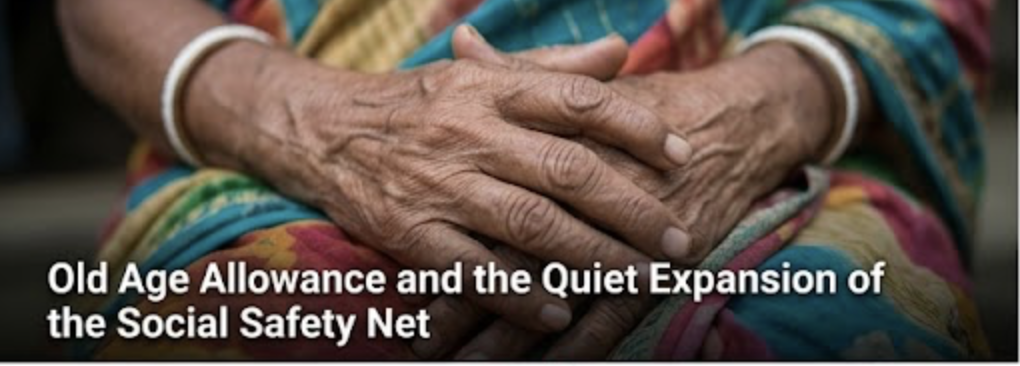
Old Age Allowance and the Quiet Expansion of the Social Safety Net
Log in or create an account to leave a comment.
Buro bokar jonno 500 taka? Bajar e 500 taka te ek soptaho cholena shala. Bhondo daya dekhachcho.