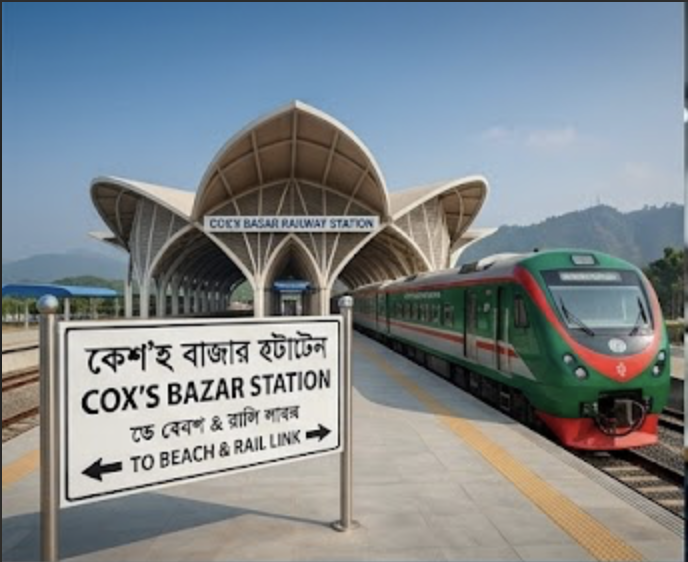
Cox's Bazar, home to the world's longest natural sea beach and, more recently, the world's largest refugee settlement, got its first-ever rail connection to the rest of the country in 2023, a genuinely significant piece of infrastructure that had been discussed for decades without ever actually breaking ground until relatively recently.
The tourism case for this line is fairly obvious, Cox's Bazar has long been constrained as a destination by the difficulty of getting there, a long, often congested road trip or a limited number of flights, and rail access opens up more affordable, higher-capacity travel for domestic tourists who make up the overwhelming majority of the area's visitor economy. That matters for a coastal economy that's struggled to translate natural beauty into the kind of sustained tourism revenue seen in comparable coastal destinations elsewhere in the region.
What gets discussed less is the line's logistics role for humanitarian operations. I've written elsewhere about Bangladesh hosting close to a million Rohingya refugees in camps concentrated in this same district, and better transport infrastructure into the area has real implications for the logistics of aid delivery and administrative access to the camps, alongside the more visible tourism benefits.
I think it's fair to flag the environmental concerns that came up during construction, the rail line passes near forest areas that form part of an elephant corridor, and conservationists raised legitimate concerns about wildlife disruption that I don't think got fully resolved before construction proceeded. Infrastructure and conservation don't always trade off cleanly, and I think this project is a reminder that development wins don't come entirely without cost.
Post
Cox's Bazar Rail Link: Connecting the Tourist Coast by Train
Log in or create an account to leave a comment.
Train e uthle mash hoye jay, schedule mene cholena. Elephant corridor dhangso kore nila shala. Bhondo unnoyon.