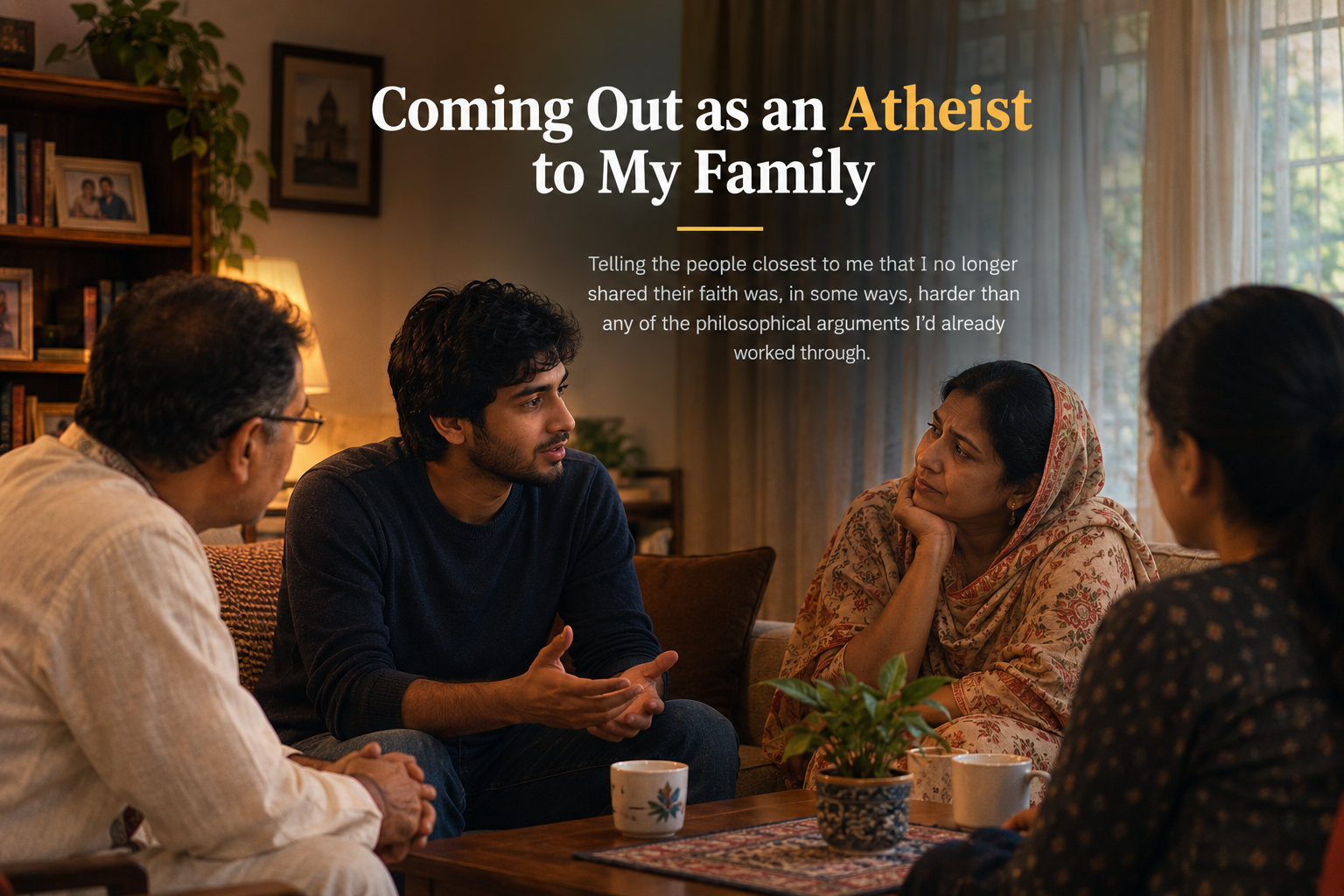
Working through the arguments, evidence, the problem of evil, textual criticism, was, in a strange way, the easier part of this whole process. Telling my own family was harder, because it wasn't an intellectual exercise anymore, it was a conversation that risked changing how people who loved me saw me, and how comfortable they felt around me.
I put it off for longer than I probably should have, partly out of fear of disappointing people, partly out of a genuine reluctance to cause them pain over something I knew mattered enormously to them. When I finally did have the conversation, it went about as well as these things reasonably can, which is to say it wasn't smooth, there was real hurt and real worry on their end, questions about whether I still had values at all, whether this reflected something they'd failed to instill.
What helped, over time, wasn't winning any argument. It was continuing to show up as the same person I'd always been, someone who still cared about them, still showed up for family obligations, still lived according to values they could recognize even if the framework underneath had changed. I think a lot of the initial fear on their side wasn't really about the specific philosophical position, it was about whether losing the shared belief meant losing the shared relationship too.
I don't think every family reconciles as gracefully as mine eventually did, and I don't want to pretend this conversation is easy or safe for everyone in every family or community. But for anyone facing that same conversation, I'd say the relationship usually survives better than the fear anticipates, provided both sides are willing to keep showing up for each other through the disagreement.
Post
Coming Out as an Atheist to My Family
Log in or create an account to leave a comment.
Poribar ke nastik bolecchos? Tomar baper obhaggo. Lok er mone koshto disos shudhu dhong korte.
you are a dead meat, you fucking Nastik.